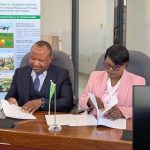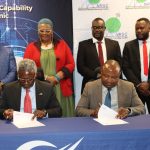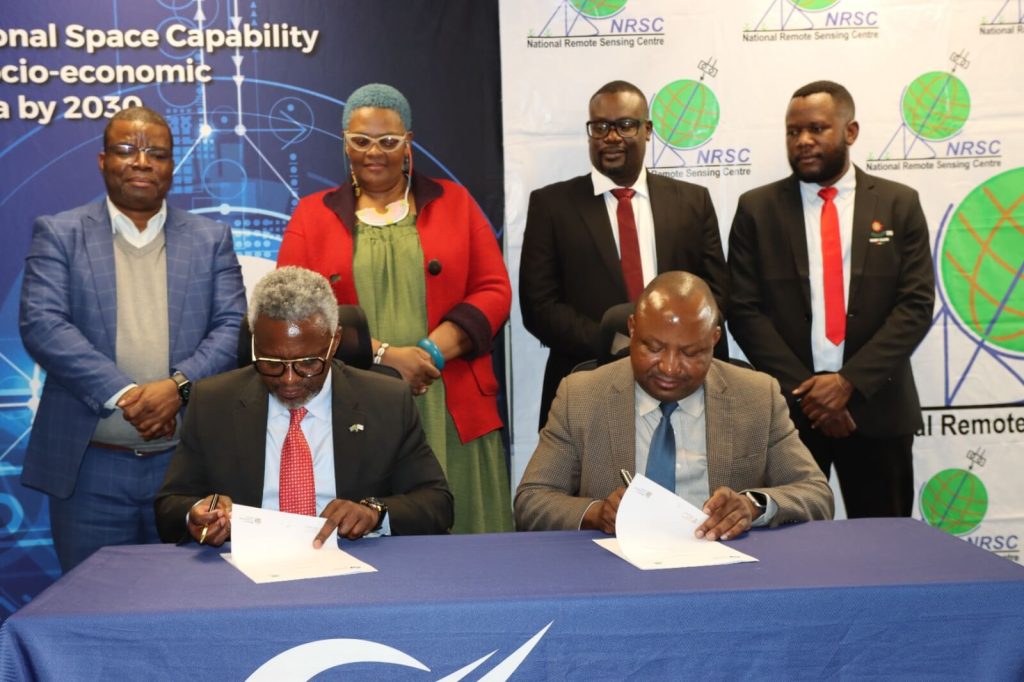
The National Remote Sensing Centre (NRSC) of Zambia has signed a landmark Memorandum of Understanding (MoU) with the South African National Space Agency (SANSA), marking a significant step towards strengthening regional cooperation in space science, Earth Observation (EO), and ground station operations.
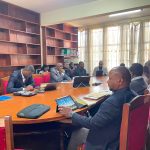
The agreement was formalised during a three-day strategic engagement held in Pretoria, South Africa, from 17 to 19 June 2026. The NRSC delegation, led by Executive Director Dr. Patrick Sibanda, participated in a series of high-level meetings and technical discussions with SANSA officials aimed at identifying practical areas of collaboration and establishing a framework for long-term institutional cooperation.
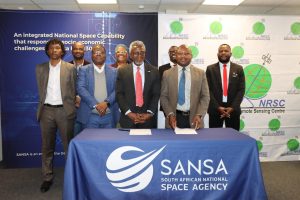
The MoU provides a foundation for joint activities in space science and technology, Earth Observation applications, Ground Receiving Station (GRS) operations, research and innovation, human capital development, technology transfer, and infrastructure development. It also promotes collaboration in policy development, data management and analysis, space engineering training, and the development of space-based solutions to address national and regional development challenges.
A major focus of the engagement was the advancement of the NRSC Ground Receiving Station located in Chibombo District. Discussions with SANSA’s Space Operations team explored opportunities for technical cooperation in ground station operations, staff capacity building, infrastructure optimisation, accreditation processes, mission support services, and strategies for ensuring the long-term sustainability of the facility.
These engagements are expected to enhance the operational capability and utilisation of Zambia’s Ground Receiving Station while creating opportunities for participation in regional and international satellite missions and space-related activities.
During the visit, the NRSC delegation toured SANSA’s state-of-the-art Space Operations facilities, gaining valuable insights into satellite mission support services, telemetry, tracking and command operations, antenna systems, mission acquisition processes, infrastructure management, and commercial ground station services. SANSA operates some of the most advanced space infrastructure on the African continent, supporting satellite missions around the world on a continuous basis.
The partnership is expected to contribute significantly to Zambia’s efforts to strengthen its national space and Earth Observation capabilities. Through collaboration with SANSA, NRSC will benefit from knowledge exchange, technical mentorship, staff training and attachments, research collaboration, and exposure to international best practices in the management and operation of space-related infrastructure.
The two institutions also explored future collaborative projects in agricultural monitoring, crop yield estimation, disaster risk management, water resources monitoring, environmental protection, land-use planning, climate change adaptation, and the detection of illegal mining activities. These applications are expected to support evidence-based decision-making and contribute to sustainable socio-economic development in Zambia and the broader region.
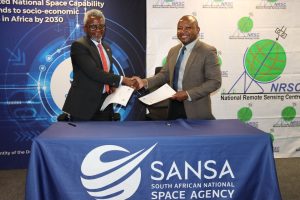
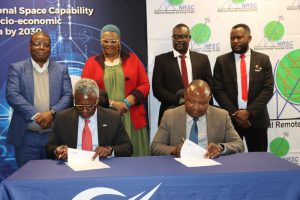
Speaking on the significance of the partnership, NRSC noted that the MoU represents a strategic investment in Zambia’s future participation in the global space sector. The agreement is expected to strengthen national capabilities in research, innovation, technology development, and the application of Earth Observation data for national development.
The partnership further reinforces Zambia’s commitment to regional cooperation in science, technology, and innovation while contributing to Africa’s growing space ecosystem.
As implementation of the MoU begins, both NRSC and SANSA look forward to translating the agreement into practical programmes, technical exchanges, capacity-building initiatives, and collaborative projects that will deliver lasting benefits to Zambia, South Africa, and the African continent.
The collaboration represents a shared vision of leveraging space science, innovation, and Earth Observation technologies to promote sustainable development, economic growth, and improved livelihoods across Africa.