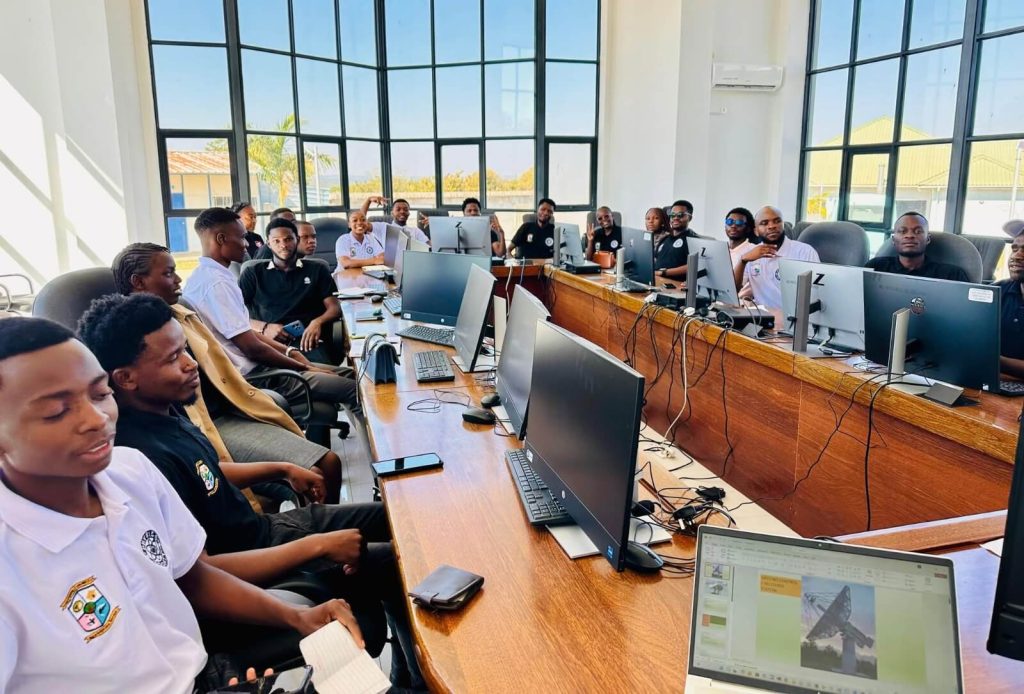
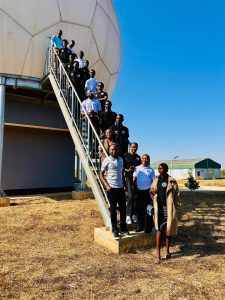
The National Remote Sensing Centre (NRSC) recently hosted a group of Physics students from Copperbelt University (CBU) at the Ground Receiving Station (GRS) in Chibombo District as part of its commitment to promoting science, technology, engineering, and mathematics (STEM) education in Zambia.
The three-day educational visit, held from 26 to 28 May 2026, provided students with a unique opportunity to gain practical exposure to satellite data acquisition, processing, and the application of remote sensing technologies in addressing real-world challenges.
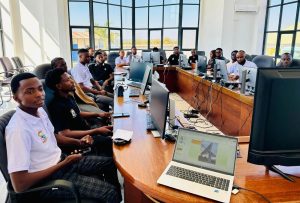
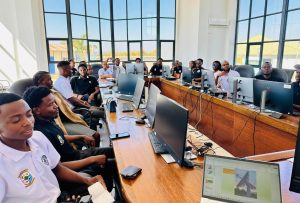
During the visit, students participated in guided tours, technical demonstrations, and interactive sessions designed to enhance their understanding of Earth Observation systems, satellite operations, and geospatial technologies. The programme offered valuable insights into how remotely sensed data is collected, processed, and utilised to support decision-making across various sectors.
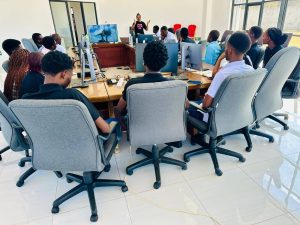
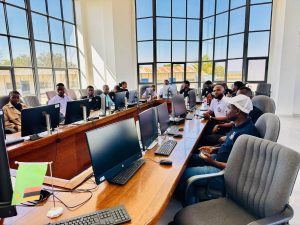
The students were introduced to a range of applications of remote sensing and geospatial technologies, including environmental monitoring, agricultural management, disaster risk reduction, land use planning, natural resource management, and climate change monitoring.
Through direct engagement with NRSC technical staff and exposure to operational facilities at the Ground Receiving Station, the students were able to bridge the gap between classroom theory and practical application, gaining a deeper appreciation of the role that space science and Earth Observation play in sustainable development.
The initiative forms part of NRSC’s broader efforts to support capacity building and human capital development in the fields of remote sensing, geospatial science, and space technology. By providing learning opportunities for students and young professionals, the Centre continues to contribute to the development of a skilled workforce capable of leveraging advanced technologies to address national development challenges.
NRSC remains committed to strengthening partnerships with academic and research institutions and fostering the next generation of scientists, engineers, and innovators who will drive Zambia’s growing space and geospatial sector.
Through such engagements, the Centre aims to inspire young people to pursue careers in science and technology while promoting greater awareness of the transformative potential of remote sensing and space-based technologies in Zambia’s socio-economic development.