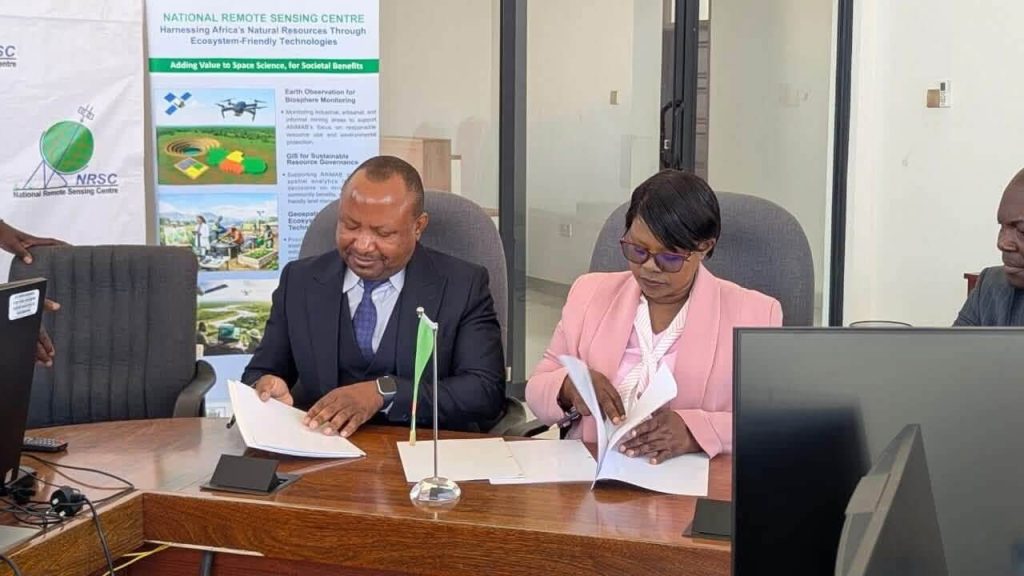
The National Remote Sensing Centre (NRSC) and the Zambia University College of Technology (ZUCT) have formally signed a Memorandum of Understanding (MoU) aimed at strengthening collaboration in education, research, innovation, technology transfer and human capital development in the fields of geospatial, remote sensing and space sciences.
The agreement establishes a framework for cooperation between the two institutions and provides opportunities for joint research, industrial attachments, internships, staff and student exchanges, curriculum development and specialised training programmes designed to support Zambia’s growing technology and innovation ecosystem.
Speaking during the signing ceremony, NRSC Executive Director Dr. Patrick Sibanda described the partnership as a significant milestone in strengthening collaboration between academia and industry.
“Today’s ceremony is much more than the signing of a document. It represents a shared commitment to building a lasting partnership that will advance research, innovation, capacity development and the application of science and technology for national development,” Dr. Sibanda said.



He noted that emerging technologies such as Earth observation, satellite systems, artificial intelligence, machine learning and big data are transforming how governments, institutions and industries make decisions. As a result, he stressed that stronger collaboration between academia and industry is now a strategic necessity rather than an option.
Dr. Sibanda further observed that one of the greatest challenges facing higher education today is bridging the gap between classroom learning and the rapidly evolving needs of industry. He explained that employers increasingly require graduates who possess not only theoretical knowledge but also practical skills, problem-solving abilities and technological competence from the outset of their careers.
“That gap can only be closed when universities and industry become genuine partners,” he said, emphasizing the importance of industry providing practical exposure and real-world challenges while universities continue to produce graduates equipped to meet emerging workforce demands.
The Executive Director highlighted that the partnership is already yielding positive results even before its formalisation. He cited the example of a Zambia University College of Technology student currently undertaking internship training at NRSC, whose innovative contributions have already helped improve aspects of the Centre’s operations.
According to Dr. Sibanda, the experience demonstrates the value of exposing students to industry environments during their studies, enabling them to develop technical skills, build confidence and contribute meaningfully to innovation before graduation.
The signing of the MoU comes at a time when NRSC is entering a significant phase of growth, particularly with the continued operationalisation of Zambia’s Ground Receiving Station, a strategic national facility for the reception, processing and dissemination of Earth observation satellite data.
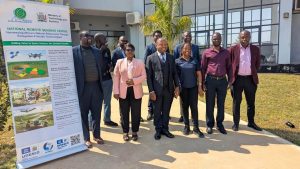

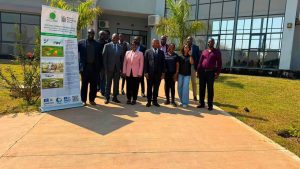
Dr. Sibanda explained that the facility represents one of the country’s most advanced scientific and engineering infrastructures and will require a growing pool of highly skilled professionals in disciplines such as electronic engineering, electrical engineering, mechanical engineering, software development, satellite communications, systems integration, network engineering, automation and geospatial technologies.
He expressed optimism that the partnership with ZUCT would serve as an important pipeline for identifying, developing and nurturing talented graduates capable of contributing to the growth of NRSC and Zambia’s broader space and geospatial sector.
The MoU further provides a framework for collaboration in several strategic areas, including:
- Joint research and innovation;
- Staff and student exchanges;
- Industrial attachments and internships;
- Specialised training programmes;
- Collaborative curriculum development;
- Technology transfer and professional development; and
- The application of geospatial and remote sensing technologies to address national development challenges.
Dr. Sibanda also noted that Zambia’s transition towards a Competency-Based Curriculum presents an opportunity for closer engagement between universities and industry to ensure academic programmes remain responsive to labour market needs. He expressed confidence that cooperation between NRSC and ZUCT would contribute to strengthening graduate employability while enhancing the country’s competitiveness in an increasingly technology-driven global economy.
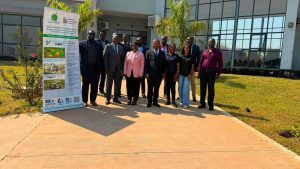
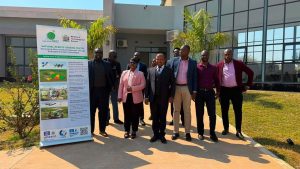
The Executive Director reaffirmed NRSC’s commitment to ensuring that the partnership produces tangible outcomes beyond the signing ceremony, including collaborative research projects, innovation challenges, internship opportunities, specialised training initiatives and technology development programmes.
“Our objective is to translate this agreement into practical programmes, collaborative research projects, innovation challenges, internships, specialised training and technology development initiatives that will produce tangible benefits for both institutions and, most importantly, for Zambia,” he said.
The five-year agreement reflects a shared commitment by both institutions to advancing science, technology and innovation while investing in the development of Zambia’s future scientists, engineers, innovators and technology leaders.
In closing, Dr. Sibanda thanked the leadership and management of Zambia University College of Technology for embracing the partnership and expressed confidence that the collaboration would become a model for successful industry-academia cooperation in Zambia.
“Together, we have an opportunity to build a model of collaboration that demonstrates how academia and industry can jointly drive innovation, strengthen human capital and acceler

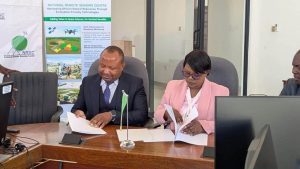


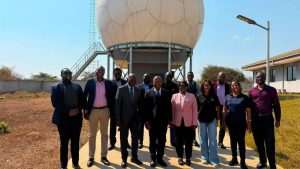
The signing of the Memorandum of Understanding marks the beginning of a strategic partnership expected to contribute significantly to research excellence, skills development, technology transfer and the application of geospatial technologies for sustainable national development over the coming years.